The “Territory-Independent” Investment Revolution of 2026
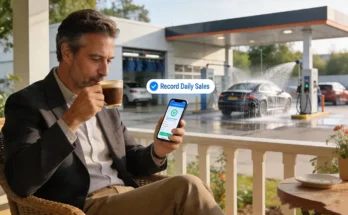
We are witnessing a tectonic shift in the definition of business ownership. For decades, franchising, especially in the home-based service sector, meant being an owner-operator. It required living in the territory, driving the wrapped van, and managing local marketing by shaking hands at chamber of commerce meetings. In 2026, that requirement has been rendered obsolete by a digital infrastructure that allows sophisticated investors to operate “hyper-local” businesses from thousands of miles away.
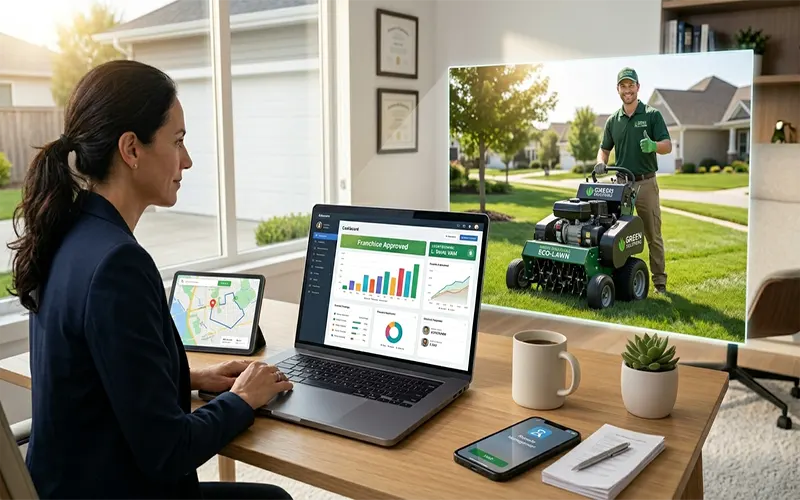
This paradigm shift, known as Remote Ownership or the Executive Model franchise, is powered by the synchronization of Cloud CRM, automated AI dispatch, VoIP communications, and sophisticated fractional management models. Today, high-net-worth individuals, busy corporate executives, and global digital nomads are realizing that a highly localized service business (like HVAC repair or residential cleaning) can be a robust, cash-flowing, and scalable investment vehicle without requiring their physical presence.
The “Executive Model” Defined: Scaling from 30,000 Feet
The critical distinction for a remote owner is understanding the separation between the Investor/Executive and the Operator.
- The Operator (General Manager): This is your in-market leader. As a remote owner, your first critical hire is a high-quality General Manager (GM). This person is the “face” of the local franchise. They handle daily staff management, customer escalations, vehicle logistics, and local business networking. You compensate them well, often with a performance-based bonus, to treat the business like their own.
- The Owner (Executive): From your home office or a balcony overlooking a distant coastline, you are the CEO. You are not managing individual customer service tickets; you are managing the GM. Your weekly 30-minute KPI call replaces the 60-hour workweek. You focus on market data, competitive intelligence, P&L analysis, and the high-level digital marketing strategy provided by the franchisor.
You are buying a blueprint and hiring a builder, rather than building the house yourself.
Top Home-Based Service Sectors for Remote Owners
Certain sectors lend themselves perfectly to a “laptop lifestyle” investment. These businesses require zero commercial real estate (making them true “home-based” for the GM) and high scalability.
1. Property Management and Short-Term Rental (STR) Services
The massive volatility and demand in the real estate market have created a boom in specialized property services. These franchises provide the digital systems and corporate-level support to manage long-term rentals (tenant screening, maintenance dispatch) and high-margin short-term rentals (dynamic pricing, professional “turnover” logistics). Corporate systems handle the 24/7 guest communications while your local GM coordinates with a contracted network of cleaners and handyman services.
2. Virtual Travel & Luxury Concierge Agencies
This sector is purely digital and has reached global maturity by 2026. These franchises provide a complete business in a box: wholesale inventory on global booking platforms, advanced CRM, and collective marketing power. The remote owner acts as the agency director, managing a remote team of home-based travel consultants, while the corporate system provides the training and back-office fulfillment.
3. Digital Marketing, Local SEO, and AI Consulting Agencies
While “home-based,” this model provides a professional business-to-business (B2B) service. In 2026, local business owners are desperate for assistance integrating AI and localized digital marketing but lack the expertise. Your franchise acts as the high-end “outsourced AI Director,” while the corporate fulfillment center (the “white-label” partner) handles the actual technical delivery of SEO, content, and ad management. Your GM is purely focused on sales and client retention.
4. B2B Commercial Maintenance and Referral Networks
Certain service models (like commercial HVAC or specialized facility maintenance) can be run from a home office. These models often utilize a “subcontractor model.” Your local GM handles the business development to secure B2B contracts, and when a service is required, they dispatch a pre-vetted, high-quality local subcontractor to perform the work. This minimizes vehicle liability and equipment overhead.
Key Technology Stack for Remote Success: The “Digital Toolbox”
A semi-absentee business is only as strong as its visibility. To manage a remote territory, you must leverage the franchisor’s technology suite. A leading remote-model franchise in 2026 includes:
- Cloud CRM with real-time dashboards: You must see every lead, job status, and technician location from any device.
- VoIP and AI Customer Support: Your phones ring on your GM’s high-end headset, but they also use AI agents to handle 80% of routine client inquiries (e.g., booking confirmation, basic troubleshooting).
- Automated Payroll and HR: Integrated systems for employee management that you can oversee from afar.
Risk Management: How to Vet a Franchise for Remote Scalability
Investing in a franchise for remote ownership requires deeper due diligence than an operator model. The single most important factor is the Franchise Disclosure Document (FDD). You must pay close attention to:
- Item 19 (Financial Performance): This item, which not all franchises include, provides actual earnings data for current owners. Look for Item 19 data specifically from owners utilizing the “semi-absentee” model.
- Item 20 (Franchise Termination Rates): Look for low numbers of terminations and non-renewals. A high failure rate suggests the system might require the intense owner-operator presence you are trying to avoid.
5 Questions to Ask a Franchisor Before Investing as a Remote Owner
- How many of your current owners live outside their primary territory?
- What specific training do you provide for hiring and compensating a General Manager (GM)?
- Do you provide centralized marketing that generates the leads for the local GM to close?
- How much “territory protection” do I have? Can I manage multiple non-adjacent territories?
- What is the average management time commitment required for an owner after 12 months in business?
Remote-Friendly Franchise Comparison
| Franchise Type | Investment Level (Total Est.) | Average Time Requirement (Weekly) | Key Revenue Driver |
| Virtual Travel Agency | $15,000 – $40,000 | 5 – 10 Hours | High Commissions (Global Supply) |
| B2B Digital Agency | $40,000 – $75,000 | 8 – 12 Hours | Recurring Monthly Retainers |
| Property Management | $80,000 – $130,000+ | 10 – 15 Hours | Per-Door Management Fees |
Pros and Cons of the Executive Model
Pros:
- Territory Independence: You can diversify your portfolio by owning a high-cash-flow service in Texas while living in Portugal.
- Scalability: You can add multiple territories simultaneously by scaling your Fractional GM structure.
Cons:
- Higher Investment in HR: The high cost of a quality GM eats into the net profit margin, requiring a slightly larger business to generate high investor returns.
- The “Human Element” Risk: Your entire investment relies on the quality of your in-market GM.
Building Your Territory-Independent Empire
The year 2026 is the year the intelligent investor breaks free from the geographic constraints of business ownership. Home-based service franchise opportunities for remote owners are no longer a theory; they are a proven asset class for generating territory-independent wealth. By selecting a high-margin sector, demanding robust technology, and identifying a stellar General Manager, you can build a scaled, diversified, and cash-flowing portfolio that you control with a single device. The future of ownership is freedom, luxury, and remote control—it’s time to claim your territory.