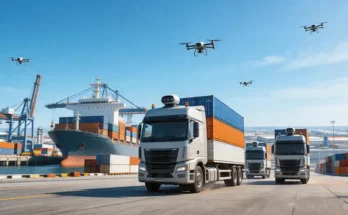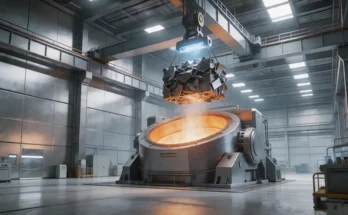
We are standing on the precipice of a profound structural transformation in the global industrial architecture. Industry 4.0, often characterized as the convergence of physical manufacturing with advanced digital technologies—including the Internet of Things (IoT), artificial intelligence (AI), cloud computing, and cognitive automation—represents more than a technological shift. It is a fundamental economic reorganization.
The Fourth Industrial Revolution is fundamentally redefining the role of labor in creation, transitioning human workers from the performance of repetitive, manual tasks to high-value cognitive oversight, system management, and creative problem-solving. This analysis asserts that Industry 4.0 acts as a potent force multiplier for manufacturing labor productivity, unlocking a new era of capital-driven output gains that were previously unattainable.
The Productivity Frontier: Bridging the Solow Paradox
For decades, economists have wrestled with the “Solow Productivity Paradox”—the observation that massive investments in information technology during the late 20th and early 21st centuries did not yield a corresponding surge in aggregate productivity statistics. Industry 3.0 brought automation to discrete tasks, but the systems remained siloed, requiring significant human intervention to bridge data gaps.
Industry 4.0 finally bridges this gap, creating fully integrated, cyber-physical ecosystems. By enabling heterogeneous systems to communicate in real-time without human mediation, Industry 4.0 achieves what sillicon-era digitization could not: systemic optimization. This synchronization dissolves operational friction, finally translating digital investment into tangible, measurable gains in output per hour—effectively pushing the productivity frontier outward.
Key Technological Drivers of Output Gains
Specific technologies within the 2026 manufacturing landscape serve as critical drivers of this productivity surge, primarily by maximizing asset uptime and optimizing the capital-to-labor ratio.
1. Digital Twins and Systemic Optimization
A Digital Twin—a dynamic, virtual counterpart of a physical asset or entire production facility—serves as the ultimate management tool. Labor productivity is maximized when human supervisors can simulate operational changes, test alternative workflows, and identify bottlenecks in a virtual environment before implementing changes in the physical world. This minimizes “trial and error” downtime and forces continuous process improvement.
2. Collaborative Robots (Cobots) and Augmented Labor
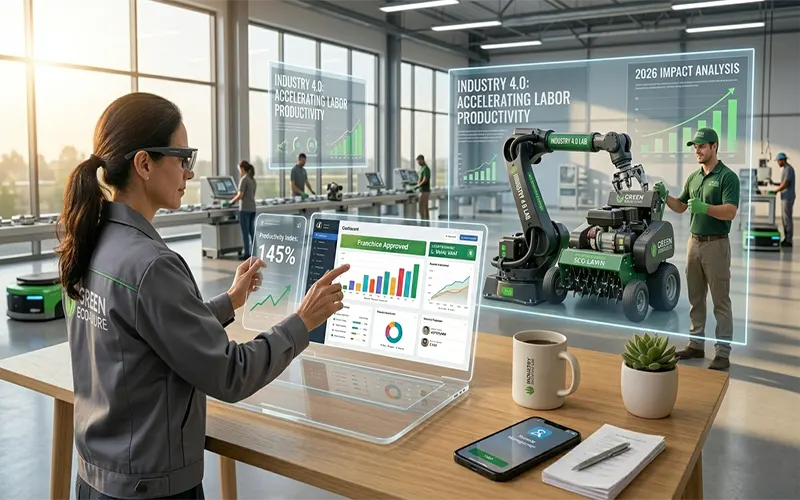
Unlike the monolithic, caged robots of Industry 3.0, Collaborative Robots (Cobots) work safely alongside human technicians. Cobots act as a productivity multiplier by taking over physically taxing, ergonomic-straining, or precisely repetitive tasks (such as specialized welding, intricate assembly, or material handling). This augmentation allows the human technician, empowered by Augmented Reality (AR) headsets showing real-time metrics, to focus on cognitive oversight, quality assurance, and system maintenance.
3. Predictive Maintenance and Zero-Downtime Goals
Downtime is the antithesis of productivity. In an Industry 4.0 facility, vibration sensors, thermal cameras, and AI-driven analytics create a predictive maintenance ecosystem. Instead of relying on rigid, schedule-based maintenance (which interrupts production) or reactive, break-fix maintenance (which halts it unexpectedly), systems anticipate failures weeks in advance. Parts are ordered autonomously, and maintenance is scheduled during existing, planned changeovers, driving system utilization toward the theoretical maximum.
Labor Market Transformation: The Augmented Shift
The primary economic consequence of Industry 4.0 is not the displacement of labor, but its powerful transformation. The nature of manufacturing work is shifting from “Blue Collar” manual operation to “New Collar” technical oversight.
1. The Concept of Augmented Labor
Labor productivity, strictly defined as Output ($Y$) divided by Labor ($L$), is set to skyrocket not because we are removing the numerator, but because the denominator is becoming infinitely more efficient. We are transitioning to a system of Augmented Labor. An AR-enabled technician managing a fleet of five Cobots is geometrically more productive than five separate manual workers.
2. The Economic Value of “Upskilling”
This shift mandates a workforce “upskilling.” Economically, the marginal value of a worker capable of diagnosing data anomalies in an AI-driven system is exponentially higher than the marginal value of a worker performing manual repetitive assembly. This transition is not merely an operational necessity; it is a macroeconomic necessity, shifting manufacturing from a low-wage, labor-intensive sector back toward a high-wage, high-value technical sector.
Comparative Dynamics: Industry 3.0 vs. Industry 4.0
| Productivity Metric | Industry 3.0 (Digital Automation) | Industry 4.0 (Cyber-Physical Systems) |
| System Utilization | ~70-80% (Limited by siloes/manual bridge) | 90%+ (Optimized by real-time sync) |
| Maintenance Strategy | Scheduled/Reactive (Intrusive) | Predictive/Autonomous (Non-Intrusive) |
| Data Flow | Periodic/Siloed (Requires human transfer) | Instant/Systemic (Fully networked) |
| Labor Profile | Task Operators (Manual skill) | Process Supervisors (Cognitive/Technical) |
| Output Flexibility | Low (Rigid lines) | High (Mass customization/Autonomous Agile) |
Capital-Labor Substitution: An Economic Analysis
Industry 4.0 fundamentally alters the Marginal Rate of Technical Substitution ($MRTS$)—the rate at which capital ($K$) can be substituted for labor ($L$) while keeping output constant.
Historically, $MRTS$ was constrained; automation could only replace labor on discrete, predictable tasks. In a 2026 context, advanced AI and cognitive robotics mean capital is now capable of substituting for labor in judgment-based tasks, complex material handling, and systemic optimization. Total Factor Productivity ($A$), representing overall efficiency gains not attributable to just $K$ or $L$ increases, is maximized in this new framework:
$$A = \frac{Y}{K^\alpha L^\beta}$$
Total Factor Productivity surges as the cyber-physical network ($A$) optimizes the capital-labor inputs, shifting the production function toward a new, autonomous equilibrium.
Challenges and Economic Disparities: The Digital Divide
Despite the undeniable macroeconomic benefits, the transition poses significant challenges and risks to economic parity.
1. The Capital Barrier for SMEs
The primary economic challenge of Industry 4.0 is the substantial initial Capital Expenditure ($CapEx$) requirement. While large, global multi-nationals can absorb the billions required to retrofit legacy factories or build greenfield “Smart Factories,” small-to-medium enterprises (SMEs) struggle. SMEs that cannot afford AI-driven systems face a crushing competitive disadvantage, risking a “Digital Divide” that concentration wealth and productivity in fewer, massive, hyper-efficient players.
2. Regional and Skill Gaps
The productivity gains are skewed toward nations with highly technical education systems and robust digital infrastructure (5G/6G connectivity, data centers). Nations—or regions within nations—that lag in “upskilling” their workforce risk being marginalized, trapped in low-productivity, Industry 3.0 ecosystems while global wealth concentrates in high-tech autonomous clusters.
autonomous ecosystems as GDP drivers
The Fourth Industrial Revolution is not simply a new iteration of manufacturing; it is the emergence of a high-value, autonomous manufacturing ecosystem. While the transition will necessitate painful labor market adjustments and require strategic anti-concentration policies, the long-term economic outlook is robustly authoritative.
Industry 4.0 provides the conclusive bridge over the Solow Paradox, allowing capital-driven efficiency to geometrically amplify human cognitive oversight. The resultant explosion in manufacturing labor productivity is not merely a sectoral benefit; it is the fundamental GDP growth engine for a modernized global economy, fueling the advancement of global living standards through the efficient creation of advanced goods and services.