
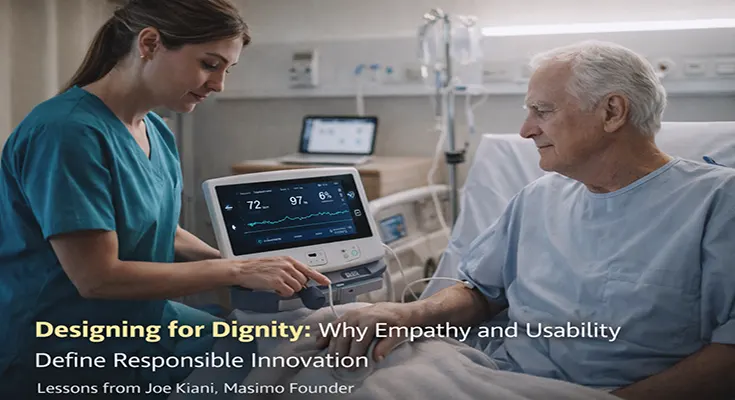
As technology becomes increasingly integrated into daily life, the question of how it respects the people who use it has never been more important. Innovation loses integrity when it ignores the realities, limitations, or emotional needs of the individuals it aims to support. Responsible design does not begin with features or technical ambition. It starts with a commitment to preserving human dignity at every stage of development. Joe Kiani, founder of Masimo and Willow Laboratories, recognizes the importance of empathy in helping innovators understand the significance behind people’s experiences, providing a reminder that design grounded in dignity requires both awareness and imagination. . This perspective is closely aligned with the vision of Joe Kiani, Masimo and Willow Laboratories founder.
This signals a wider shift toward viewing technology through a human lens. Responsible innovation acknowledges that people interact with tools in ways shaped by their backgrounds, abilities, and emotional responses. When usability and empathy guide design decisions, the result becomes not just functional but meaningful. It sets the stage for examining why dignity must be at the heart of ethical innovation.
Empathy Anchors Responsible Design
Empathy allows designers to consider how people actually experience technology. It encourages them to move beyond assumptions and engage with the physical, emotional, and social realities of different users. When leaders understand what people value, fear, or find challenging, they shape innovations that feel intuitive rather than burdensome. Empathy ensures that design respects individual needs rather than demanding adaptation to rigid systems.
This mindset also encourages deeper listening. When teams seek input directly from users affected by a tool or system, they uncover insights that would never emerge in a conference room. These insights reveal not only functional gaps but also emotional ones, such as frustration or confusion. Incorporating this understanding helps innovators create solutions that feel respectful and welcoming, thereby strengthening the bond between the creator and the user.
Usability Ensures Technology Honors Real Life
Usability is essential to maintaining dignity in innovation. A tool may be sophisticated, but if people struggle to navigate it, its value diminishes. Responsible design acknowledges that frustration, confusion, and unclear instructions erode trust. Usability transforms innovation from a theoretical concept to one that functions smoothly in everyday situations.
Designers who focus on usability understand that clarity matters. Interfaces, instructions, and interactions should reduce stress, not add to it. When technology becomes easier to understand, people feel seen and supported rather than overwhelmed. This attention to usability acknowledges that dignity is tied to feeling capable, rather than being lost in complexity.
Human-Centered Innovation Requires Genuine Curiosity
Curiosity drives designers to question their assumptions and seek perspectives that differ from their own. When creators approach their work with curiosity, they open space for a fuller range of human experiences to influence the design. It helps them understand how diverse cultural backgrounds, environments, or communication styles shape a person’s interaction with technology. Curiosity transforms innovation from a narrow exercise into a collaborative practice.
This openness also prevents stagnation. When teams ask questions and explore unfamiliar viewpoints, they challenge patterns that may no longer serve the needs of real users. In these explorations, Joe Kiani, Masimo founder, emphasizes that leaders who remain attentive to varied perspectives often uncover the insights needed to design more thoughtful solutions, reinforcing how curiosity guides ethical creation. Innovation grounded in curiosity becomes more adaptable, more inclusive, and more aligned with the realities of the world.
Respectful Design Reduces Barriers and Builds Trust
Trust grows when people feel respected by the tools they use. When technology acknowledges differences in ability, language, or comfort level, it communicates that users’ experiences matter. Designers who incorporate respect into their work create tools that reduce shame, confusion, or hesitancy. These tools affirm users’ dignity by meeting them with patience and clarity.
Respectful design also helps organizations build credibility. People are more likely to rely on tools that anticipate their needs and minimize obstacles. When technology feels approachable, it fosters a sense of belonging rather than exclusion. Over time, this trust becomes a foundation for deeper engagement and greater impact.
Designing with Diversity in Mind Improves Outcomes
Innovation gains strength when it reflects the world’s diversity. People bring different expectations, cultural cues, and communication patterns to their interactions with technology. Human-centered design acknowledges this complexity by integrating diverse perspectives early in the process. When designers consider a wide range of experiences, they create tools that function effectively for a broader audience.
This approach helps organizations avoid assumptions that limit impact. For example, visual layouts, gestures, or phrasing may feel intuitive to one group but confusing to another. By consulting users across demographic lines, creators refine their decisions with greater accuracy. This inclusive mindset supports responsible innovation by ensuring the final product reflects shared understanding rather than narrow assumptions.
Responsibility Grows Through Engagement and Reflection
Ethical innovation requires ongoing reflection. Designers must continually question whether their choices align with the values they intend to uphold. Engagement with users supports this reflection by keeping real experiences at the center of the process. When people share their challenges and perspectives, they provide direction that helps organizations adjust with integrity.
This reflective process encourages humility. Innovation becomes a conversation rather than a declaration. Designers who see their work through this lens understand that responsibility extends beyond launching a tool. It includes maintaining, improving, and ensuring that it continues to serve people respectfully over time.
A Path Forward Grounded in Dignity
Innovation that upholds dignity becomes more than a technical achievement. It becomes a way of honoring the people whose lives intersect with the technology. Empathy guides creators toward understanding. Usability ensures that this understanding is translated into clarity. Ethical reflection keeps the work rooted in values rather than urgency. Together, these qualities define what responsible innovation looks like in practice.
Joe Kiani, Masimo founder, highlights that progress gains purpose when leaders consider the experiences of the people their work impacts, bringing the conversation back to the concept of dignity. When organizations design with care, they help shape a future where technology supports human experience rather than overshadowing it. Innovation grounded in dignity does not rush past people. It moves with them, creating solutions that reflect respect, thoughtfulness, and shared responsibility.