The “Gravity Well” of Agglomeration
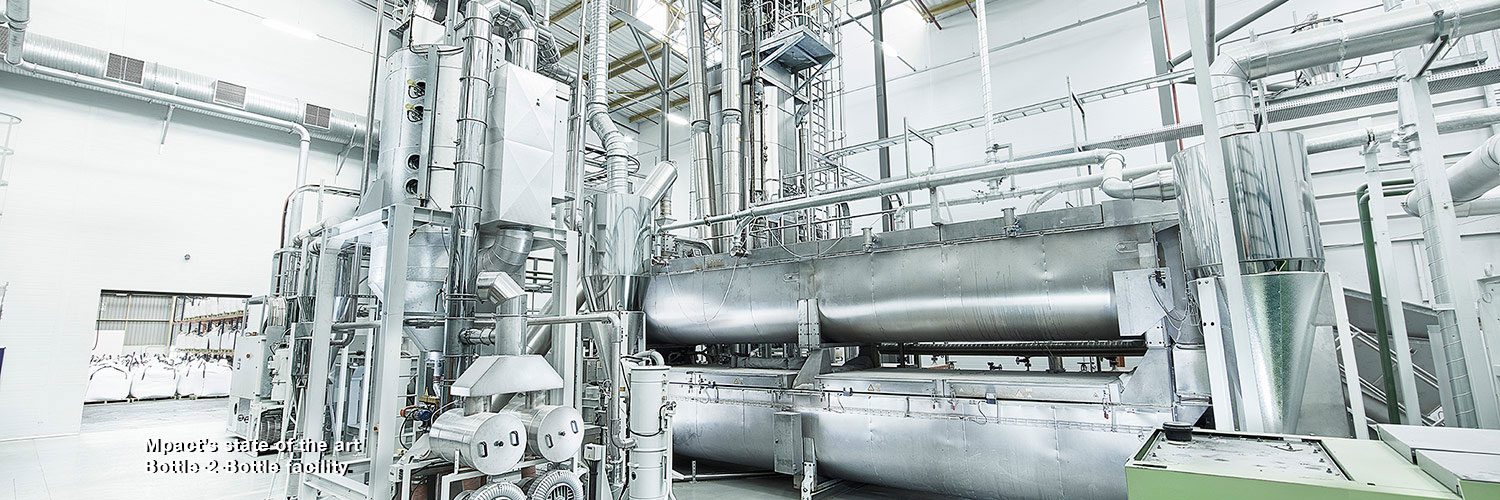
In the traditional view of market competition, firms are expected to distance themselves from rivals to capture local demand. However, the empirical reality of the global economy reveals the opposite: firms in the same industry frequently huddle together in dense geographic pockets. These “Industrial Clusters” are not accidental; they are the physical manifestation of Agglomeration Economies.
The central thesis of cluster theory is that geographic proximity generates a “gravity well” of efficiency. As Alfred Marshall first observed, when an industry chooses a locality, it stays there because the advantages of being near competitors outweigh the costs of proximity (such as higher rents). This phenomenon, often referred to as the Marshallian Trinity, explains why specialization leads to radical increases in productivity and serves as the primary engine for regional growth.
The Three Pillars of Cluster-Based Economies of Scale
1. Labor Pooling
A specialized cluster creates a deep, “thick” labor market. For a firm, the risk of labor shortages is mitigated by the local presence of a large pool of workers with industry-specific skills. Conversely, for the worker, the cluster reduces the risk of unemployment; if one firm fails, dozens of others requiring the same expertise are within commuting distance. This concentration reduces search and matching costs, leading to a higher equilibrium of human capital.
2. Supplier Specialization
Clusters allow for a high degree of vertical disintegration. In an isolated environment, a firm must be self-sufficient. In a cluster, the market for intermediate inputs becomes “thick” enough to support highly specialized subcontractors. This allows firms to benefit from variety and lower costs in their supply chain. This can be modeled using a simplified Dixit-Stiglitz production function, where $Q$ is the final output and $x_i$ represents the variety of specialized inputs:
$$Q = \left( \sum_{i=1}^{n} x_i^{\frac{\sigma-1}{\sigma}} \right)^{\frac{\sigma}{\sigma-1}}$$
As the number of specialized suppliers ($n$) increases within a cluster, the final output $Q$ increases for the same level of expenditure, representing a clear external economy of scale.
3. Knowledge Spillovers
Marshall famously noted that in these clusters, “the secrets of the industry are in the air.” Knowledge spillovers—the informal exchange of information between employees of different firms in social or professional settings—accelerate the pace of innovation. Unlike formal R&D, these spillovers are localized; the “tacit knowledge” required to solve complex industrial problems often requires face-to-face interaction that digital tools have yet to fully replicate.
Internal vs. External Economies of Scale
It is critical to distinguish between these two forces. Internal Economies of Scale occur when a single firm, such as a massive automotive manufacturer, lowers its unit costs by increasing its own volume of production.
In contrast, External Economies of Scale are those that reside outside the firm but within the region. A small startup in Silicon Valley or a boutique fashion house in Milan is more efficient not because it is large, but because the region is large and specialized. The startup benefits from the pre-existing infrastructure, legal expertise, and venture capital that only exist because the cluster grew.
Regional Growth Dynamics: The Multiplier Effect
The presence of a dominant cluster triggers a powerful regional multiplier. When an aerospace cluster in Toulouse or a biotech hub in Boston attracts high-wage, specialized talent, it creates secondary demand for:
- Specialized Infrastructure: Dedicated research labs, high-speed logistics, and technical universities.
- Service Industries: Specialized legal, accounting, and marketing firms tailored to that industry.
- Venture Capital: Investors move to clusters to reduce their own monitoring costs and tap into the local deal flow.
The Self-Reinforcing Cycle of Cluster Growth
- Initial Advantage: A natural resource or a university anchor attracts the first few firms.
- Entry of Support Services: Specialized suppliers move in to serve the anchor firms.
- Labor Attraction: Workers migrate to the region for the “thick” job market.
- Increased Productivity: Agglomeration economies lower costs, making the region more competitive.
- New Firm Incubation: High knowledge spillovers lead to “spin-off” startups, further thickening the cluster.
The 2026 Context: Digital-Physical Hybrids
By 2026, the debate over the “death of distance” has reached a nuanced conclusion. While “Digital Clusters” (AI and Software) utilize remote collaboration, they remain intensely concentrated in physical hubs like San Francisco, London, and Bangalore.
Why? Because while work can be remote, innovation and trust-building remain high-touch activities. 2026 clusters are “Digital-Physical Hybrids”—they use the globe for talent but use the physical cluster for high-level strategy, venture capital “demo days,” and the informal networking that drives the next generation of LLM architectures.
The Risks of Specialization: Lock-in and Dutch Disease
Regional governments must be wary of “Lock-in.” When a region becomes hyper-specialized, it risks Dutch Disease—where the success of one industry drives up local costs (land, labor) so high that it stifles the growth of other, diverse sectors. If the core industry faces a technological “black swan” (e.g., the decline of the internal combustion engine in a traditional automotive cluster), the region may lack the adaptive capacity to pivot, leading to long-term economic decay.
Comparison of Cluster Profiles
| Characteristic | Mature Clusters (e.g., Automotive) | Emerging Clusters (e.g., AI Hardware) |
| Growth Driver | Process efficiency and supply chain optimization. | Knowledge spillovers and rapid prototyping. |
| Labor Market | Deep pool of specialized vocational talent. | High concentration of PhD-level R&D talent. |
| Capital Focus | Large-scale CAPEX and debt financing. | Venture capital and equity-based “moonshots.” |
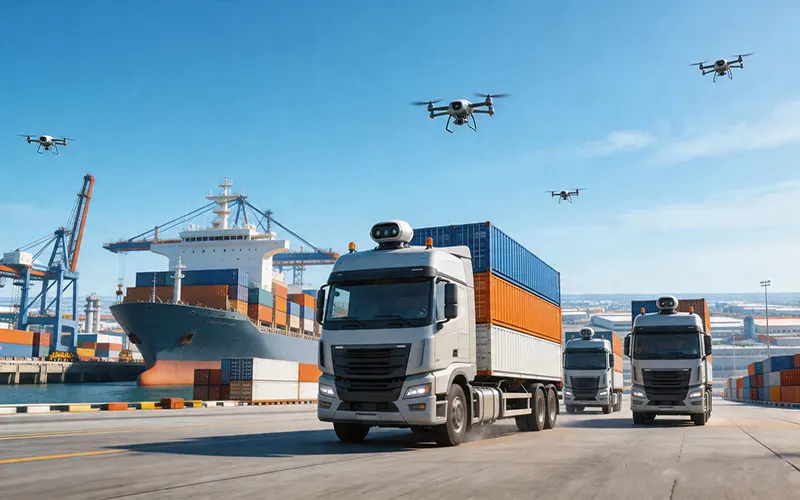
| Infrastructure | Heavy logistics (Rail, Port, Specialized Power). | High-speed data, compute clusters, and university labs. |
Policy Implications: Fostering “Fertile Soil”
Regional policymakers often fail when they try to “pick winners” by building empty industrial parks and hoping a cluster appears. Successful 2026 policy focuses on fostering the “Marshallian Trinity”:
- Investment in Specialized Education: Aligning university curricula with local industrial strengths.
- Infrastructure for Interaction: Creating physical spaces (innovation districts) that encourage face-to-face “spillovers.”
- Open Supplier Ecosystems: Reducing barriers for small, specialized suppliers to enter the local market.
The Enduring Power of Place
Despite the proliferation of digital communication, geography remains a fundamental determinant of economic potential. Specialized industrial clusters create a self-sustaining momentum that individual firms cannot replicate. By understanding that economies of scale are often a communal regional asset rather than a private firm asset, urban planners and economists can better design regions that are not just productive, but resilient. In the globalized world of 2026, the most successful firms are those that realize their greatest competitive advantage is not just what they do, but where they are.